| |
| The Crucible of Merit and the Politics of Sabotage: Is Denying Employment to Recommended Candidates a Deeper Conspiracy? |
| |
| |
 |
| |
| |
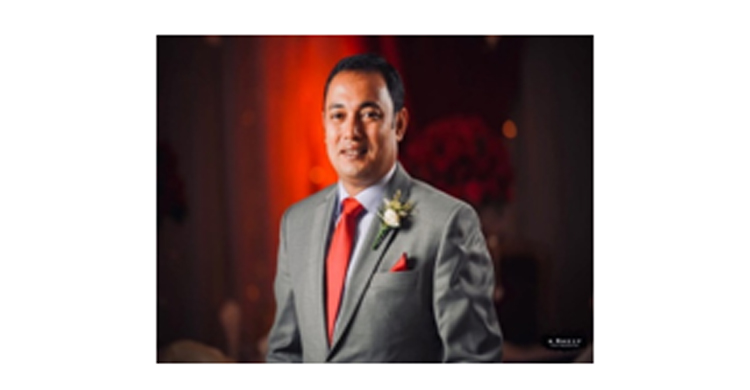
| Prof. Dr. Sheikh Asif S. Mizan One of the fundamental pillars of a welfare-oriented, equitable state is the uncompromised recognition of merit and the seamless guarantee of good governance. In the context of Bangladesh, the lengthy and arduous process of securing a public service position is not merely a professional battle; it represents a profound life struggle—a true crucible for every candidate. When a job seeker successfully navigates the marathon of preliminary, written, and viva voce examinations—overcoming countless personal, social, and financial odds—to earn a final recommendation, it ceases to be a mere individual victory. It becomes the culmination of a family’s long-cherished dream. Regrettably, despite securing final recommendations, a vast number of primary school teacher candidates are currently left in limbo, denied their appointment letters without a clear rationale. This administrative inertia and visible deprivation not only violate the fundamental rights of the youth but also stoke deep public indignation. As a scholar of criminology and governance, a compelling question inevitably arises: Is this artificial crisis merely a byproduct of bureaucratic red tape, or is it a calculated act of sabotage designed to undermine the credibility of the government? Viewed through the lens of Jean-Jacques Rousseau’s Social Contract Theory, when citizens fulfill all obligations stipulated by the state and prove their merit, the state is bound to honor their rights. Withholding appointment letters after final recommendations constitutes a direct breach of this unwritten social contract. Historically, appointments are withheld only when negative findings surface during police verification—a process that must strictly adhere to objective, legally sound criteria. In the current socio-political context, public concern regarding individuals associated with past authoritarian regimes or subversive activities is both understandable and legitimate. However, keeping hundreds of qualified candidates hanging for months without transparent, documented justifications is wholly unacceptable in a system committed to justice. This prolonged delay has predictably fueled widespread skepticism. A significant portion of the public perceives this inaction as a continuation of the authoritarian and biased practices of the previous regime. Others suspect it to be an exploitative tactic employed by factional elements within the administration or law enforcement to extract illicit rents. However, a deeper analysis through the frameworks of criminology and political sociology reveals a far more sinister objective. Drawing upon Samuel P. Huntington’s formulation in Political Order in Changing Societies, when an administration creates artificial crises or demonstrates institutional failure amidst heightened public expectations, it inevitably catalyzes severe social discontent. It appears that conspirators are leveraging this exact psychological dynamic as a strategic weapon to destabilize the current government and erode public trust. The systematic disenfranchisement of meritorious youth to build a reservoir of public resentment is not an isolated administrative lapse; it bears all the hallmarks of deliberate Bureaucratic Sabotage. Entrenched opportunists and hostile actors within the administrative apparatus are subtly engineering a confrontation between the government and the populace. They are acutely aware that the grievances of a group as large and influential as primary school teachers can ripple through the entire social fabric, sparking broader instability. Therefore, a stern warning is in order: for the sake of the state and the integrity of good governance, this deliberate opacity must end immediately. I strongly urge the highest authorities to institute a high-level, independent judicial or administrative inquiry into this matter. A comprehensive white paper must be issued detailing why and at whose behest these recommended candidates have been denied their rightful appointments. Unmasking these internal saboteurs, restoring meritocracy, and safeguarding the government`s integrity must remain the highest priorities. Let merit prevail, and let good governance triumph. About the Author: Prof. Dr. Sheikh Asif S. Mizan is the Vice-Chancellor of Daaru Salaam University, Somalia, and an expert in Criminology, Governance, and Human Rights.
|
| |
|
|
|
| |

|
|
Chief Advisor: Md. Tajul Islam,
Editor & Publisher Fatima Islam Tania and Printed from Bismillah Printing Press,
219, Fakirapul, Dhaka-1000.
Editorial Office: 219, Fakirapul (1st Floor), Dhaka-1000.
Phone: 02-41070996, Mobile: 01720090514, E-mail: muslimtimes19@gmail.com
|
|
| |
|