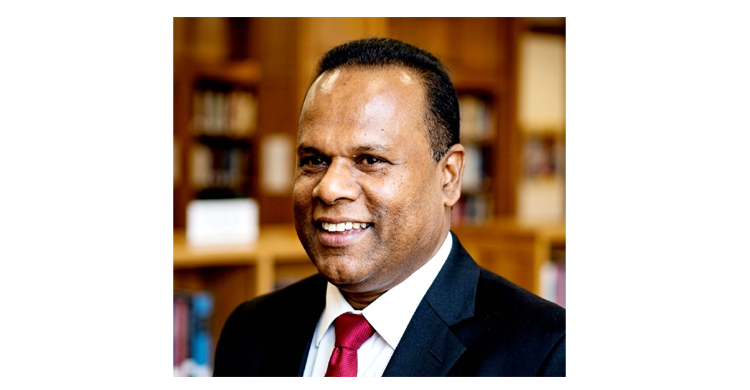
By Professor Dr. Asif Mizan, International Relations, Human Rights & Criminology Analyst; Vice-Chancellor, Daarul Salaam University, Somalia.
The classical grammar of international relations and the core essence of the "Good Neighbor Policy" are anchored in mutual respect, equal recognition of sovereignty, and an unyielding commitment to non-interference in internal affairs. Yet, in South Asian geopolitics, the bilateral narrative between Bangladesh and India has long revolved around an asymmetric power structure and a one-sided psychological hegemony.
In recent times—particularly following the historic July–August mass uprising of 2024 and the inauguration of Bangladesh`s newly elected democratic government in February 2026—certain calculated maneuvers by New Delhi have ignited deep indignation and mistrust within Dhaka’s policy circles and public consciousness. What is celebrated in diplomatic jargon as a "Strategic Partnership" has, on the ground, increasingly become synonymous with geopolitical breach of trust—a classic example of strategic betrayal.
Below is an analysis of this deepening rift and its critical touchpoints through the lenses of international law, global criminology, and geopolitical strategy:
1. The Audacity of August 5, 2026: Platforming a Convicted Fugitive and Dhaka’s Stiff Protest
Disregarding international criminal law and the legal obligations enshrined in the 2013 bilateral Extradition Treaty, New Delhi has not only granted long-term refuge to Sheikh Hasina—a fugitive convicted of crimes against humanity by the International Crimes Tribunal (ICT)—but has also facilitated a direct platform for her to stoke political instability inside Bangladesh.
On August 5, 2026—the second anniversary of the mass uprising—the Foreign Correspondents` Club (FCC) in New Delhi was utilized to host a virtual press conference and broadcast a special audio message from Sheikh Hasina to the international media. In her address, defying Bangladesh’s legal framework, she labeled the popular uprising a "planned regime change" and threatened to return to the country by December.
In response, the Bangladesh government and the Ministry of Foreign Affairs lodged a stern, unyielding diplomatic protest. Dhaka officially characterized the event as a "grievous insult to sovereignty" and a severe violation of diplomatic etiquette. Furthermore, hosting this press conference on Indian soil directly flouted the ICT’s legal injunction prohibiting the broadcast of her provocative political statements. While New Delhi attempted to evade responsibility by framing the press briefing as a "private media event," South Block’s stance constitutes what international law terms hostile passive compliance.
2. Border Killings: Human Rights Violations Under the Guise of "Non-Lethal" Policies
Along one of the world`s longest and most sensitive international borders (4,156 km), the continuous extrajudicial killing of unarmed Bangladeshi citizens by India’s Border Security Force (BSF) persistently erodes bilateral trust. Despite repeated high-level commitments to deploy non-lethal weapons, fatalities and torture along the border persist at an alarming rate. By sustaining a border policy that tramples upon International Human Rights Law (IHRL) and the fundamental "Right to Life," India displays utter disregard for its neighbor—actions that amount to systemic crimes under the Rome Statute.
3. Asymmetric Transit and Corridor Policies
While Bangladesh unilaterally granted India extensive road, rail, and waterway transit through its territory to connect the Indian mainland with its northeastern states, New Delhi consistently hesitates to grant Bangladesh direct trade access to Nepal and Bhutan via the strategic Siliguri Corridor ("Chicken’s Neck").
Theoretically, this reflects a classic Dominance-Dependency Model. India’s insistence on one-sided gains jeopardizes Bangladesh’s national security and strategic autonomy. A clear policy shift is now evident as Dhaka recently rejected conditioned Indian Lines of Credit (LoC) for transit infrastructure, choosing instead to mobilize its own resources and partner with international development agencies.
4. Shared Rivers and Unannounced Floods: The Perils of Hydropolitics
International water law, including the Helsinki Rules, mandates equitable sharing of transboundary river waters and timely exchange of hydrological data. Leaving the Teesta Water-Sharing Treaty in limbo for over a decade and withholding fair shares of the 54 common rivers poses a permanent threat to Bangladesh’s agriculture, economy, and ecological security.
Moreover, opening dam gates (such as Farakka or Dumbur) during the monsoon season without prior warning or real-time data sharing triggers sudden, catastrophic flooding in Bangladesh. Weaponizing water resources—or "hydropolitics"—to geopolitically subdue a lower-riparian state is an unethical strategy widely condemned by the global community.
5. Trade Deficits and Non-Tariff Barriers
Bangladesh’s bilateral trade deficit with India currently stands well above billions of dollars. Although Bangladesh offers India vast market access and duty-free benefits under the South Asian Free Trade Area (SAFTA) agreement, Bangladeshi exports face constant non-tariff and para-tariff barriers in the Indian market—such as anti-dumping duties, stringent laboratory testing requirements, and bureaucratic red tape. This economic protectionism highlights New Delhi`s tendency to view Bangladesh not as a sovereign economic partner, but merely as a captive consumer market.
6. "Chanakya Neeti" and Long-Standing Interference in Internal Politics
Over the past decade and a half, Delhi’s overt and covert diplomatic support for an authoritarian regime—sustaining it in power while denying the democratic rights of the Bangladeshi people—represented a major geopolitical misstep in South Asia. Lobbying globally for a despotic government at the expense of the democratic aspirations of the Bangladeshi public created a state of strategic blindness. Following the 2024 uprising and the new political reality of 2026, this approach has proven to be a severe diplomatic failure for India.
Theoretical Assessment and the Road Ahead
Evaluated through the Hegemonic Stability Theory of Realism, India seeks to maintain regional dominance by suppressing the sovereign choices of its neighbors. However, Neorealism dictates that no state will perpetually compromise its national dignity or sovereignty. India must recognize the newly calibrated geopolitical equilibrium and national reconstruction in post-2024 Bangladesh.
The current state of Bangladesh-India relations remains fragile, strained by deep-seated mistrust and psychological tension. Should New Delhi continue to weaponize deposed political forces to destabilize Bangladesh internally, it will ultimately backfire—damaging India’s own long-term security and strategic interests in the region.
Ultimately, New Delhi must realize that bilateral relations are not built with a single individual or a fallen political party, but with an independent, sovereign state and its 180 million vigilant citizens. To rebuild a sustainable, dignified, and enduring partnership, India must abandon its coercive Chanakya Neeti, stop providing political platforms to convicted fugitives, end border killings, and cease hydrological pressure. A stable relationship can only be restored through absolute respect for mutual sovereignty, strict adherence to international law, and genuine equality. Otherwise, this unilateral geopolitical rift will remain a permanent threat to the stability and security of South Asia.