| |
| Hague verdict gives fresh lease of life to Indus Waters Treaty, Pakistan welcomes Hague ruling |
| |
| |
 |
| |
| |
| Special Correspondent: Pakistan has welcomed a ruling by the Court of Arbitration in The Hague that the Indus Waters Treaty between India and Pakistan remains fully in force, rejecting India’s decision to place the decades-old water-sharing agreement in “abeyance”.
The court announced its findings in a press release, saying India’s decision to put the treaty on hold was not permissible under the treaty or applicable international law.
According to Pakistan’s government, the court unanimously determined that the treaty has neither been terminated nor suspended and that India remains legally bound by its obligations under the agreement.
The ruling is significant because the Indus Waters Treaty governs the sharing and use of the waters of the Indus river system, which is vital to the agriculture, drinking water and energy needs of millions of people in both countries.
The Court of Arbitration stated that India’s decision to place the treaty in “abeyance” was not allowed under the treaty or other relevant rules of international law.
It further held that India must continue to comply with its obligations under the treaty. These include rules concerning the design and operation of hydro-electric projects on the Western Rivers, as well as provisions relating to the settlement of disputes.
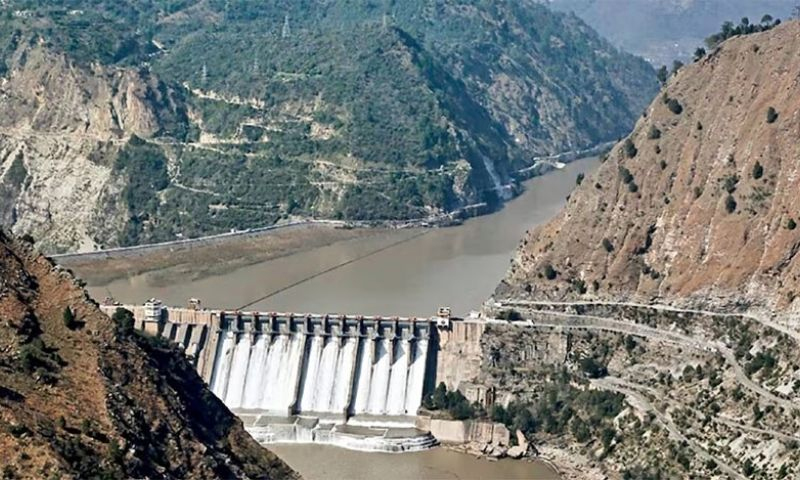
The court also issued interim measures concerning the Ratle Hydroelectric Power Project (RHEP). It ordered that India must not carry out certain concreting work on the dam wall and power-intake structure above specified levels until 90 days after the Neutral Expert delivers a final decision.
The Neutral Expert’s decision is currently expected in July 2027.
The court has also ordered India to provide reports concerning the project’s construction schedule until shortly after the Neutral Expert’s final decision.
Pakistan’s government said it welcomed both the court’s conclusion that the treaty remains in force and the interim measures imposed on India.
In a statement, Islamabad said it would carefully examine the full Award and Decision once they are formally published.
The court has not yet released the complete documents. They are expected to be published within the coming week or so.
Pakistan said it would consider how the court’s findings could help create a pathway for India and Pakistan to return to engagement under the treaty.
The Pakistani government also stressed that any future engagement should reflect the binding legal obligations of both countries under the Indus Waters Treaty.
The Indus Waters Treaty was signed by India and Pakistan in 1960, with the World Bank playing a role in facilitating the agreement. It divided the use of the waters of six major rivers of the Indus system between the two countries.
Under the arrangement, Pakistan was given the main use of the Western Rivers—the Indus, Jhelum and Chenab—while India received the principal use of the Eastern Rivers—the Ravi, Beas and Sutlej. India is nevertheless allowed certain uses of the Western Rivers under specific conditions set out in the treaty.
The agreement has survived several periods of severe tension between the two nuclear-armed neighbours, including wars and other major disputes.
The latest legal development comes amid a long-running disagreement between India and Pakistan over water projects and the interpretation of the treaty.
Pakistan has repeatedly raised objections to certain Indian hydro-electric projects on rivers covered by the treaty, arguing that some project designs could affect Pakistan’s water interests.
India, meanwhile, has challenged Pakistan’s approach to dispute settlement and has maintained its own positions regarding the treaty and its implementation.
The latest ruling does not by itself resolve every disagreement between the two countries. Rather, it establishes an important legal position concerning the treaty’s continued operation while related issues continue to be considered through the treaty’s dispute-settlement mechanisms.
For ordinary people in the region, however, the issue goes beyond legal arguments. The rivers covered by the treaty support farming, electricity generation and livelihoods across large parts of India and Pakistan.
The Hague ruling therefore represents an important development in one of South Asia’s longest-running disputes over shared water resources—and could potentially influence how the two neighbours manage their water relationship in the years ahead.
|
| |
|
|
|
| |

|
|
Chief Advisor: Md. Tajul Islam,
Editor & Publisher Fatima Islam Tania and Printed from Bismillah Printing Press,
219, Fakirapul, Dhaka-1000.
Editorial Office: 219, Fakirapul (1st Floor), Dhaka-1000.
Phone: 02-41070996, Mobile: 01720090514, E-mail: muslimtimes19@gmail.com
|
|
| |
|