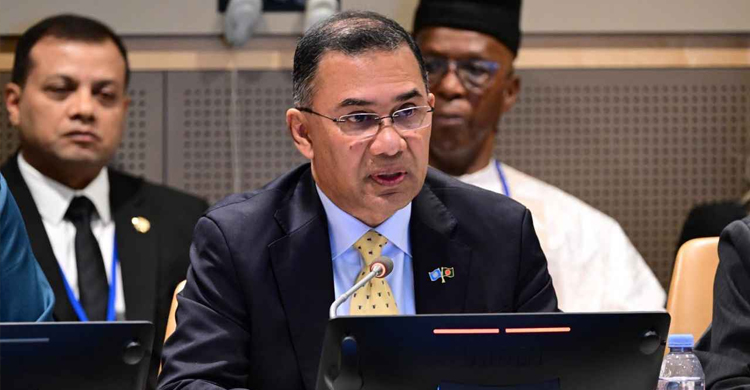
Lion Md. Gani Miah Babul
When the prices of fuel oil increase, the impact does not remain confined to the price of a single commodity. It directly and indirectly affects almost every aspect of daily life, including transportation, agriculture, industry, business and trade, the supply of goods, and household expenses. At a time when ordinary people in Bangladesh are already struggling to keep their incomes in line with the rising cost of living, the latest increase in fuel prices has placed an additional burden on people`s lives. From September 21, 2026, the price of diesel has been increased from Tk 115 to Tk 135 per litre, octane from Tk 145 to Tk 165, petrol from Tk 140 to Tk 160, and kerosene from Tk 135 to Tk 155. In other words, the prices of all four types of fuel have increased by Tk 20 per litre.
The government has stated that the Bangladesh Petroleum Corporation (BPC) has been facing substantial financial losses due to higher international fuel prices and increased transportation costs. According to the Energy Division, BPC incurred losses of approximately Tk 22,875 crore between March and August. The government has also cited high international prices, pressure on foreign exchange reserves, and the risk of fuel smuggling to neighbouring countries as reasons for the price adjustment.
The realities of the international market and the financial pressure on the state-owned fuel agency certainly need to be taken into consideration. But an equally important question is: who will ultimately bear this additional cost? Following an increase in fuel prices, transport operators, farmers, industrial establishments, traders and consumers may all attempt to adjust their respective costs. The combined impact of these adjustments will eventually be felt by ordinary people. Therefore, the increase in fuel prices cannot be viewed merely as an administrative adjustment of prices; doing so would fail to capture the full reality of its impact.
Diesel is particularly important to Bangladesh`s economy. In addition to the transport sector, diesel is used for agricultural irrigation, electricity generation and industrial activities. According to reports based on Bangladesh Petroleum Corporation data, the country consumes approximately 4.35 million tonnes of diesel annually, accounting for around 64 percent of total petroleum product consumption. A significant portion is used in the transport sector, while substantial quantities are also used in agriculture, power generation and industry. Therefore, it is natural to expect that an increase in diesel prices will spread its impact across different layers of the economy.
The transport sector is among the first areas where pressure is likely to emerge. Buses, trucks, covered vans, vessels and other forms of transportation depend significantly on fuel as an operating cost. When fuel prices increase, transport operators face higher expenses. These additional costs may eventually be transferred to consumers through higher fares and increased freight charges. Following the latest fuel price increase, a decision has been taken to raise bus fares by 17 paisa per kilometre. The decision applies to both intercity and metropolitan buses. The decision was taken at a meeting of the Road Transport and Highways Division on Tuesday, September 22. Under the decision, the existing fare for intercity buses is Tk 2.23 per kilometre. With an increase of 17 paisa, it would rise to Tk 2.40 per kilometre. In Dhaka and Chattogram metropolitan areas, the current fare of Tk 2.53 per kilometre may rise to Tk 2.70. Following the adjustment of fuel prices, the justification for increasing transport fares, the cost of freight transportation and the impact on market prices must also be closely monitored.
One of the major concerns surrounding fuel price increases is their “multiplier effect.” Fuel is required to produce goods, transportation is required to bring those goods to market, and businesses also incur electricity and other energy costs to operate. As a result, an increase in fuel prices at one stage can raise costs at other stages. If traders increase product prices because of higher transportation costs, the impact ultimately reaches consumers. Similarly, when production costs rise, producers may also attempt to adjust their prices. In this way, higher fuel prices can create additional cost pressures throughout different levels of the economy.
The agricultural sector is no exception. Fuel costs are directly associated with irrigation, transportation of agricultural products, operation of agricultural machinery and marketing. An increase in diesel prices may raise farmers` production costs. Higher production costs may, in turn, affect the market prices of agricultural products. Food prices are already one of the major concerns for ordinary people. In August 2026, the country`s overall inflation rate declined to 8.26 percent, while food inflation stood at 7.02 percent. Against this backdrop, it is important to closely monitor whether higher fuel prices lead to increased production and transportation costs and place additional pressure on inflation.
The industrial and business sectors will also feel the impact. Higher costs for factory operations, transportation of raw materials, distribution of goods and logistics can increase overall production costs. Industries that are already facing challenges such as fuel and power shortages, high interest rates, rising raw material prices and market uncertainty may face additional pressure from higher fuel costs. An increase in fuel prices may raise the cost of doing business and put further pressure on the competitiveness of export-oriented industries.
At the same time, it must be acknowledged that it is not always possible to keep fuel prices artificially low for an extended period while ignoring international market realities. The government has stated that, because of high international prices, BPC had been incurring losses of up to approximately Tk 89 per litre of diesel, with daily losses reaching nearly Tk 109 crore. According to the government, the latest price adjustment is intended to reduce BPC`s annual losses, save foreign currency and reduce the risk of fuel smuggling across the border.
However, alongside reducing state-owned enterprises` losses, it is equally important to consider how the additional burden on the public can be minimized. If maintaining fiscal balance results in significant increases in transportation costs, food prices, agricultural production costs and household expenses, the social consequences must also be taken into account. Low- and middle-income people, in particular, spend a large portion of their income on food, housing, transportation, education and healthcare. If their incomes do not increase at a comparable rate, higher fuel prices can directly affect their standard of living.
Market monitoring must therefore be strengthened. No group should be allowed to take advantage of the fuel price increase to impose unjustified increases in the prices of goods and services. When determining transport fares, reliable calculations of actual operating costs, distance, fuel consumption and other expenses should be taken into consideration. At the same time, charging passengers more than the approved fare, imposing abnormal freight charges and creating artificial shortages to increase prices must be strictly controlled.
Greater transparency is also needed in the fuel price-setting mechanism. Information on how quickly lower international prices will be reflected in the domestic market, how much adjustment will be made when international prices rise, the difference between BPC`s purchase and selling prices, the amount of subsidy involved and the overall financial burden on consumers should be regularly disclosed to the public. This would help people understand the reasons behind price adjustments and reduce unnecessary confusion and suspicion.
Long-term measures are also necessary, including improving fuel efficiency, making public transportation more efficient, expanding the use of electric and alternative-fuel vehicles, increasing the capacity of rail and waterways for freight transportation, and expanding the use of renewable energy. Simply increasing fuel prices cannot solve the structural problems of the energy sector. Reducing import dependence and strengthening national energy security should also remain important economic priorities.
After a fuel price increase, its impact should be assessed regularly through reliable data. The effects on transport fares, agricultural production costs, industrial production costs, freight charges and market prices should be monitored separately. Whenever abnormal price increases are detected, prompt action should be taken. Simply announcing a new price and leaving the market to operate without effective monitoring may further increase the burden on ordinary people.
Although fuel prices are linked to international market conditions, their ultimate impact is felt in people`s daily lives. Therefore, alongside the economic necessity of price adjustments, public interest, market stability and the financial capacity of low- and middle-income people must also be taken into consideration. Reducing the losses of state-owned agencies is important, but it is equally important to monitor whether the process is causing an excessive increase in people`s cost of living.
The impact of rising fuel prices extends from transportation to markets, from agriculture to industry, and from production costs to household expenses. Therefore, the government`s most important responsibility at this moment is to manage the realities of the fuel market and the financial pressures on the state while taking effective measures to control public suffering. If strict market monitoring, reasonable transport fares, necessary protection for farmers and low-income people, and a transparent fuel pricing mechanism are ensured alongside the price adjustment, its impact can be brought under some control. Otherwise, the pressure created by rising fuel prices will gradually pass through different layers of the economy and further increase the cost of living for ordinary people. Therefore, even while acknowledging the realities behind fuel price adjustments, effective measures must be taken to reduce the suffering of the public.
About the Author:
Lion Md. Gani Miah Babul
Teacher, Poet, Columnist, Social Worker and Organizer
Founding President,
Bangladesh Government Secondary Teachers Association (Agriculture), Central Committee
Joint Secretary General,
Nirapad Sarak Chai (NISCHA), Central Committee
Phone: 01552631118, 01842631118
Email: lionganibabul@gmail.com