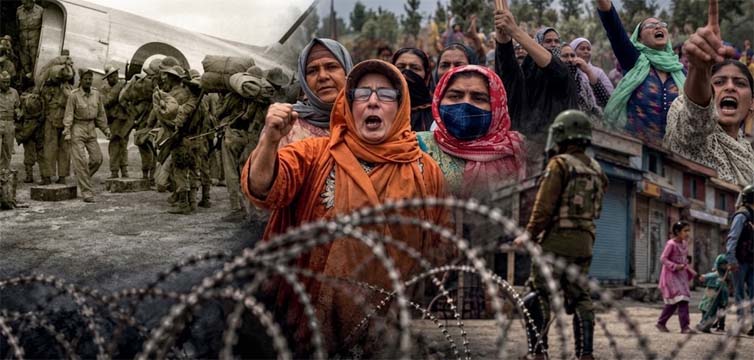
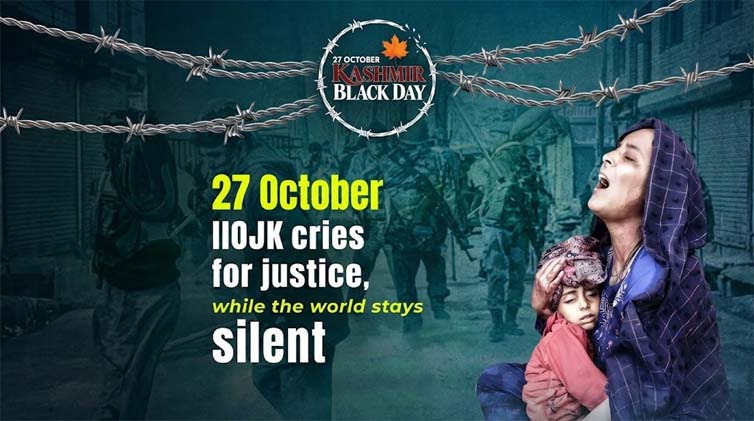
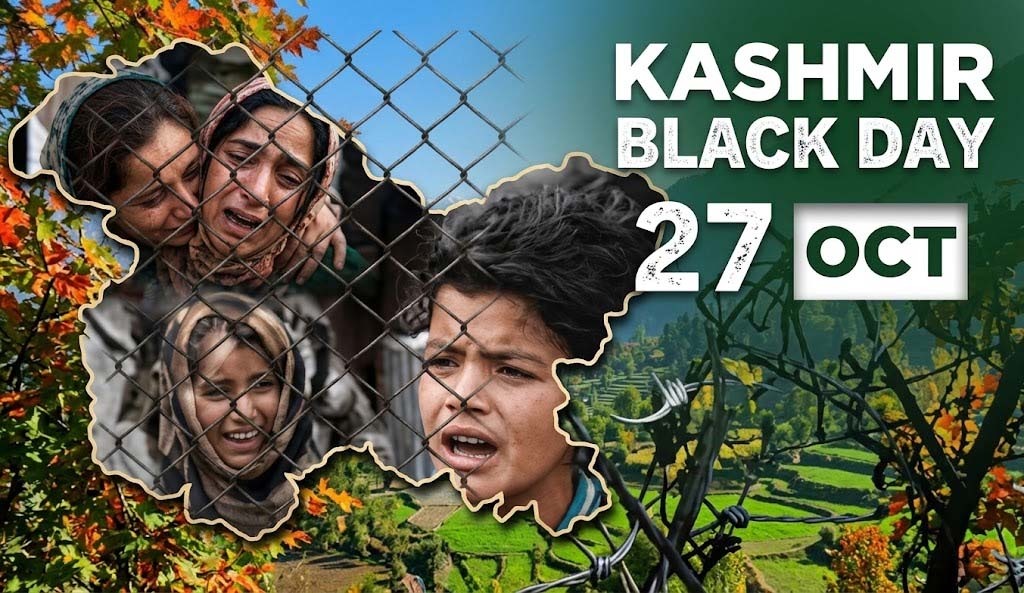
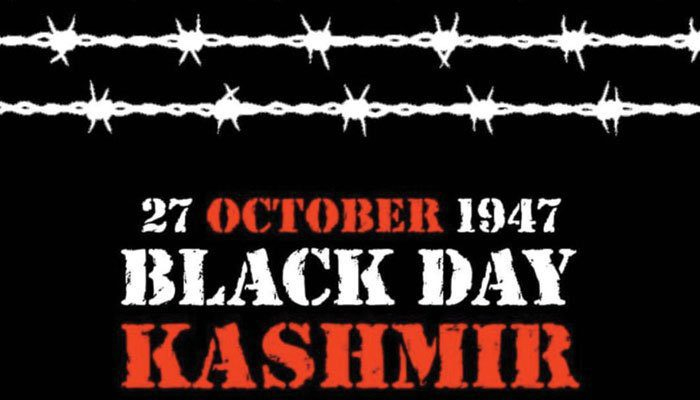
Shazia Ashraf: October 27, 1947, marks a pivotal and dark chapter in the history of Jammu and Kashmir. The day is observed as “Black Day” by Kashmiris to commemorate the arrival of Indian troops in the region, an event that marked the beginning of a prolonged military presence and decades of conflict.
For 79 years, the Kashmir dispute has remained unresolved, with the aspirations of the Kashmiri people for self-determination still unfulfilled. Despite repeated international efforts and United Nations Security Council resolutions calling for a peaceful settlement, the promise of a free and fair plebiscite to allow the people of Jammu and Kashmir to decide their political future remains unrealised. The failure to resolve the dispute has hindered the peace process and contributed to persistent instability and geopolitical tensions in South Asia.
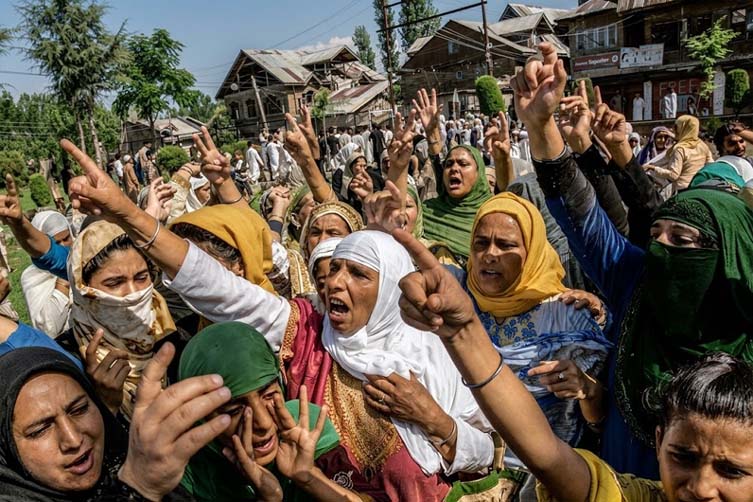
The human cost of this prolonged conflict has been devastating for the people of Indian-administered Jammu and Kashmir. For decades, residents have faced allegations of human rights violations, restrictions on fundamental freedoms and an atmosphere of fear and uncertainty. The demand for self-determination is not merely a political aspiration; it is a central issue in the international debate over the future status of Jammu and Kashmir, addressed in several United Nations Security Council resolutions.
Those who advocate independence or political rights have, according to human rights groups and other observers, faced crackdowns, arbitrary detentions and violence. For many Kashmiris, the struggle for political rights is inseparable from the pursuit of basic human dignity, security and freedom.
As the world continues to grapple with the unresolved Kashmir dispute, the gap between diplomatic efforts and the realities experienced by people on the ground remains a major concern. Millions of Kashmiris continue to await a lasting political settlement that addresses their aspirations and enables them to participate meaningfully in determining their future.