Staff Reporter : Civil society representatives and members of climate-displaced families have called for ensuring rehabilitation, permanent housing, basic civic services and compensation for impoverished people forced to leave their homes due to climate change and seek shelter in urban slums. They have recommended formulating inclusive plans that incorporate the urban poor, allocating separate budgets for city corporations and municipalities, and ensuring their rightful access to the Loss and Damage Fund to address the adverse impacts of climate change.
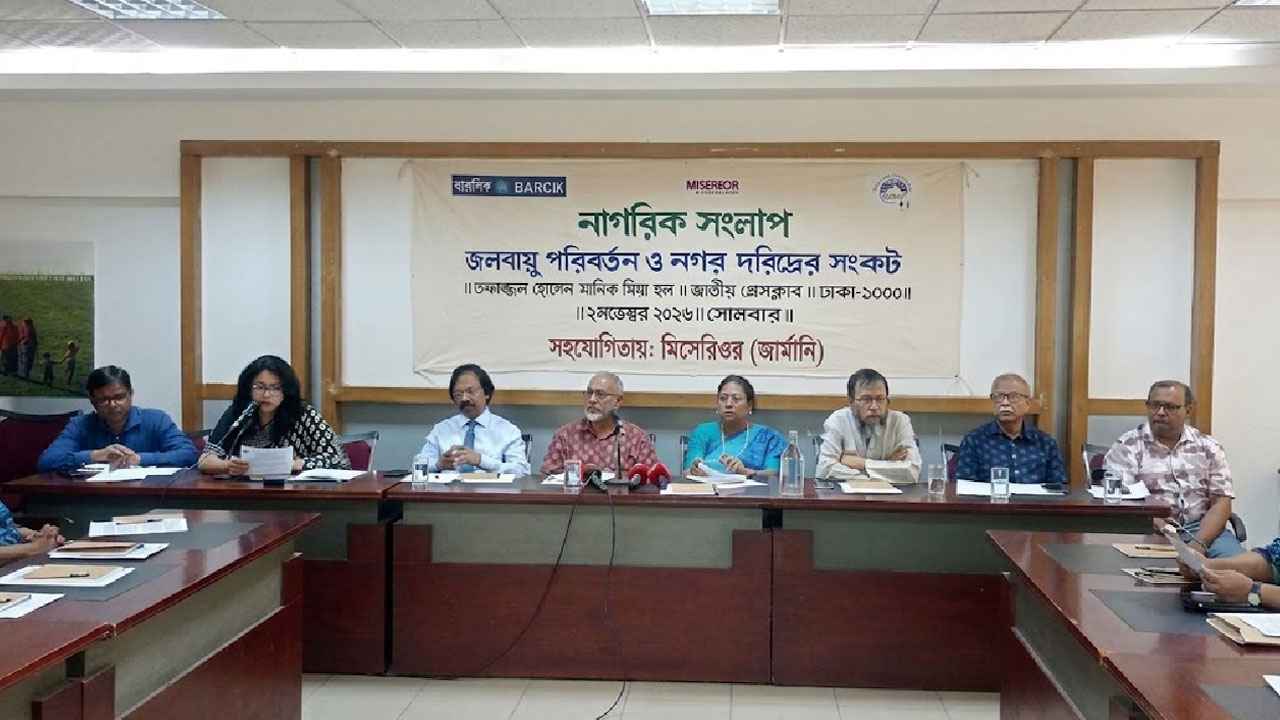
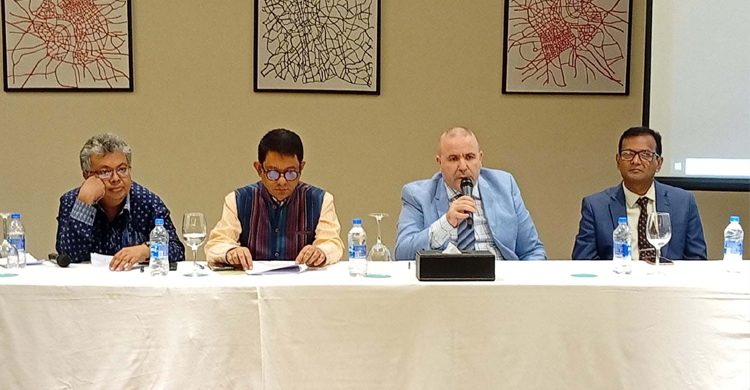
The demands and recommendations were raised at a citizens’ dialogue titled “Climate Change and the Crisis of the Urban Poor” held at the National Press Club on Monday. The event was jointly organised by the Bangladesh Resource Centre for Indigenous Knowledge (BARCIK) and Children Watch Foundation (CWF).
The dialogue was chaired by BARCIK Director Md. Kamruzzaman and moderated by the organisation’s coordinator, Md. Jahangir Alam. Shah Israt Azmeri, chairperson of CWF, presented the concept paper.
Among those who took part in the discussion were Member of Parliament Anisur Rahman Khokon, public health expert Dr. Lelin Chowdhury, Bangladesh Poribesh Andolon (BAPA) Treasurer Aminul Rasul, CAP Executive Director Khandaker Rebeka San-Yat, Buriganga Bachao Andolon Convener Mihir Biswas, Sundarbans and Coastal Protection Movement Coordinator Nikhil Chandra Bhadra, and Slum Dwellers` Protection Committee President Hosne Ara Begum Rafeza, along with representatives of various organisations.
Speaking at the dialogue, MP Anisur Rahman Khokon said people from marginalised rural communities were being forced to migrate to cities for various reasons. He said a liveable environment could be developed for these people through coordinated initiatives by the government and non-governmental organisations. Converting slums into planned multi-storey residential buildings could also provide housing for a larger number of people, he added. He expressed hope that initiatives such as Farmers` Cards and Family Cards would help low-income rural people become self-reliant.
At the dialogue, members of climate-displaced families and community leaders living in slums across Dhaka and other cities shared their experiences and hardships. According to them, nearly 70 per cent of slum dwellers were compelled to migrate from rural areas to cities between 2002 and 2019 due to cyclones such as Sidr, Aila, Amphan and Remal, severe salinity and river erosion in coastal areas, as well as prolonged droughts and declining groundwater levels in northern Bangladesh.
They said life had become extremely difficult for people displaced from Bhola, Barishal, Sunamganj, Kishoreganj, Rajshahi, Naogaon, Chapainawabganj, Shyamnagar in Satkhira and Koyra in Khulna who had taken shelter in urban slums. Alongside a lack of housing, safe drinking water, healthcare and employment opportunities, they also lived under the constant threat of eviction.
Eight-point demands and recommendations were presented on behalf of the urban poor displaced by climate change. These included prioritising marginalised communities in urban planning, allocating separate budgets for city corporations and municipalities to strengthen climate adaptation and resilience, ensuring housing and rehabilitation for displaced people, and providing government assistance to improve dilapidated slum houses.
Other demands included ensuring access to education, healthcare, safe drinking water and sanitation; delivering early warnings about heatwaves, floods and irregular rainfall; raising awareness among slum residents; and arranging permanent housing free from the threat of eviction. The participants also called for protecting the rights of slum dwellers and ensuring fair compensation for climate-related losses and damages.
Calling for a stronger government role in securing climate compensation, the organisers also submitted a memorandum containing 13 demands to Prime Minister Tarique Rahman. The demands included ensuring access to climate adaptation funds, reducing the use of fossil fuels and carbon emissions, allocating funds for crop insurance to protect farmers` harvests, and providing financial support for environmentally friendly agricultural practices.
The memorandum also recommended providing advanced technology and training free of cost for climate adaptation, establishing special funds for housing and skills development for low-income urban residents, simplifying the conditions for accessing climate funds, and making climate financing more accessible at the local level. It further called for dedicated budget allocations for women, children and persons with special needs.