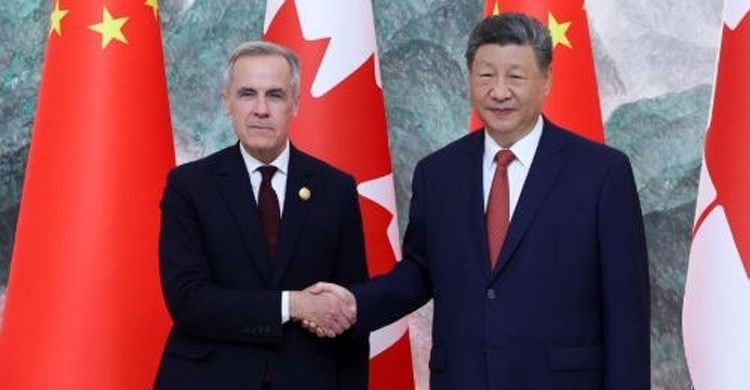
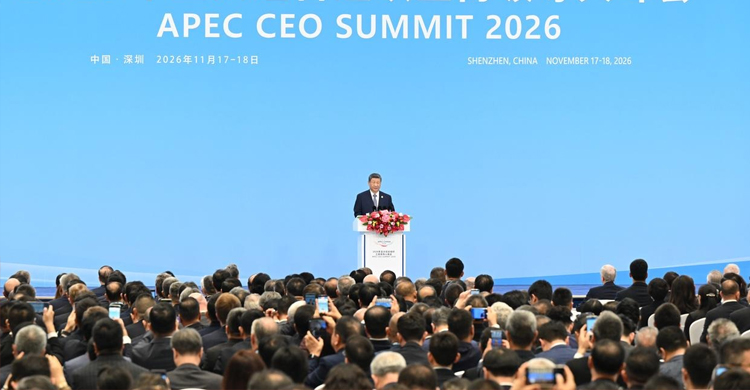
The upcoming 33rd APEC Economic Leaders` Meeting in Shenzhen, which carries the potential for a meeting among the leaders of China, Russia, and the United States, has captured widespread global attention. For people around the world, the most significant aspect of this gathering is that the three major powers have agreed to sit at the negotiating table and engage in dialogue, opening up a new horizon of peace for the world.
Today`s meeting among the leaders of China, Russia, and the United States is not aimed at reconstructing a closed circle where a handful of major powers monopolize the global order. Rather, it represents a concerted effort to explore a new path of coexistence among major powers—characterized by "manageable differences, moderate competition, and the prospect of peace."
Held against the backdrop of the APEC Economic Leaders` Informal Meeting, the purpose of this engagement is not to provoke confrontation, but to build a "foundation of security" for the Asia-Pacific region. In today’s world, security and trade are inextricably linked: without a stable regional environment, the resilience of industrial chains becomes meaningless; conversely, without interdependent economic and trade ties, security conflicts easily lose their deterrence. A key potential dimension of strategic communication among China, Russia, and the United States is to jointly establish clear boundaries—so as to prevent normal regional economic and trade cooperation from becoming wholly entangled in great-power security conflicts, and to stop decoupling, unilateral sanctions, and economic coercion from dragging the entire Asia-Pacific region, and indeed the global economy, into the quagmire of bloc confrontation. This undoubtedly sends a positive signal to the countries of the Global South, which aspire to independent development and do not wish to be forced into taking sides.
Source: Wang Haiman-Alim-Cai, China Media Group (CMG)