Zubeyea Binte Kabir
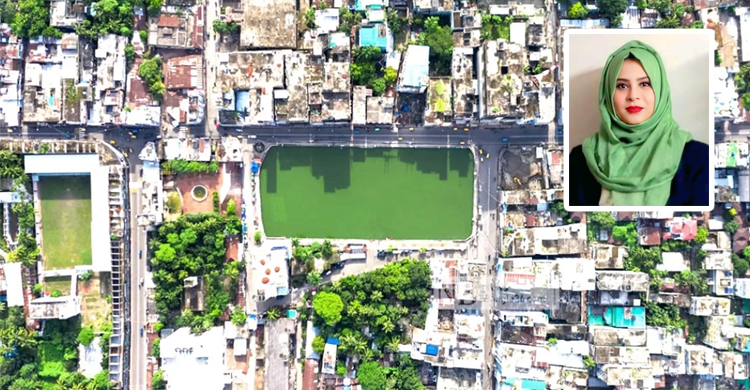
Barishal, the vibrant heart of southern Bangladesh, floats gracefully on a network of rivers, canals, and waterways. Every morning, the city awakens to the shimmering reflections of the water; every evening, it is enveloped in a serene tranquility as the rivers whisper their timeless lullaby. Long celebrated as the “Venice of the East,” this city, shaped by nature’s hand, is a living masterpiece. Yet beneath its charm, a silent disaster is unfolding imperceptible to the eye, unheard by the ear, but gradually eroding the very foundation of the city.
My personal life is deeply intertwined with this city. Though I was born and raised in Magura district, my roots, my beloved people, and the soil of Barishal have shaped my present. Today, my family—my husband, three children, my in-laws, and I—live here. Barishal is not merely a city to me; it is the safe future of my children, the sanctuary of my family, the home of our dreams. The gradual subsidence of this city fills me with unease and profound concern. The rivers, canals, and waterbodies that carry the heritage of centuries now face grave risk. Barishal belongs not only to me but to millions whose lives, aspirations, and security depend on it. This silent subsidence can no longer be ignored.
Recent research by the Geological Survey of Bangladesh in collaboration with Germany’s Federal Institute for Geosciences and Natural Resources has highlighted the alarming reality. Analysis of data from 2014 to 2020 reveals that Barishal’s land is sinking at an average rate of 1.66 millimeters per year. Though seemingly minor, this figure carries a dire warning: nature never destroys suddenly; it sends gradual, silent signals, which are often neglected.
Small Rate, Massive Risk: An annual subsidence of just over one and a half millimeters may seem trivial, but over decades, it can escalate into a serious threat. There have even been years when the land sank nearly an inch—a critical warning for the city’s stability.
Signs of a Tilting City: The impact is already visible. Newly constructed multi-storey buildings in areas like Bauddhpara, BM College vicinity, C& B No. 1 Bridge, Nothullabad, Bottola, Karim Kuthir, Hatim Ali College intersection, Swarod, and Banglabazar exhibit subtle tilts, reflecting the city’s internal instability. Satellite imagery confirms these shifts, which are even more pronounced on the ground.
Invisible Urban Pressure: Unplanned urbanization intensifies this crisis. To accommodate a growing population and development needs, towering buildings are sprouting across the city, often without considering the soil’s carrying capacity.
Destruction of Waterbodies: Once-abundant canals, ponds, and wetlands are disappearing, filled in for settlements and commercial establishments. This destroys the natural balance of the soil, increasing the risk of subsidence.
Silent Void Below: The most profound cause lies beneath. Uncontrolled groundwater extraction creates voids in the soil, causing the upper layers to slowly settle, making the entire city sink unknowingly.
Alarming Water Table Changes: Where water was once safely accessible at 700–800 feet, wells now need to reach 1,100 feet. In summer, water levels drop 30–40 feet, whereas they previously fell only 15–20 feet. This shift is not merely environmental; it signals an emerging social and economic crisis.
Impact on Agriculture and Livelihoods: Lowering water tables disrupt irrigation and increase production costs. Farmers the backbone of the region’s economy are the most affected. An environmental threat is turning into an economic disaster.
Coastal Vulnerability: As a coastal region, Barishal faces a dual threat: sinking land and rising sea levels. This combination creates a perilous scenario for the city’s future.
New Reality of Tides: If the trend continues, in a few decades, even modest tides could flood extensive areas of the city. Daily tides, rather than rare natural disasters, will become a persistent threat.
A 50-Year Perspective: Projected over fifty years, today’s 1.66-millimeter annual subsidence adds up to nearly 8 centimeters. Though seemingly small, combined with rising sea levels, the consequences are severe. If this rate doubles over a century, the situation could surpass our worst imaginings.
Urban Planning Failure: Barishal’s silent crisis reflects broader failures in urban planning. Development without strategic planning is never sustainable it breeds new problems. Unplanned growth, high-rise construction, and reclamation of canals and wetlands compromise soil stability. Lack of proper geotechnical assessments for infrastructure projects puts the city on a risky path.
Administrative Negligence and Data Secrecy: Despite research findings, much of the data remains inaccessible to the public, creating administrative opacity. Transparency is essential when a city’s very existence is at stake. Proactive governance can halt this gradual subsidence; negligence will worsen the threat.
Law and Policy Enforcement Challenges: Strict enforcement of regulations to control unplanned construction is critical. Mandatory geotechnical surveys for all projects, preservation of waterbodies, prevention of illegal landfills, and regulation of groundwater extraction are indispensable government responsibilities.
Experts emphasize immediate action. Advocate Bilkis Jahan Shirin, a distinguished social worker and administrator of Barishal City Corporation, warns that unchecked land subsidence and unplanned urbanization severely threaten residents’ quality of life. She stresses that each development project must include geotechnical assessments and long-term sustainable planning. Shirin highlights that tackling this crisis is a collective responsibility requiring coordination between local authorities, relevant government departments, and engaged citizens.
Professor Dr. S. M. Hemayet Jahan, Pro-Vice Chancellor of Patuakhali Science & Technology University, points out that excessive groundwater extraction, waterbody infill, and uncontrolled river usage are destabilizing the soil, posing a grave threat to urban safety and sustainable development. He calls for a national initiative integrating modern technology, scientific research, and climate analysis. Awareness among citizens and responsive government action are equally vital.
Mahmuda Begum Pakhi, renowned poet and head of the Bengali Department at Nolciti Government College, emphasizes that Barishal must transform into a climate-resilient, sustainable city through immediate, effective interventions.
Government Action Required: Experts advocate for a coordinated national urban-geotechnical risk management policy, with tailored plans for coastal cities. Groundwater use should be minimized, and surface water resources prioritized. Treatment of rivers, canals, and ponds, rainwater harvesting, and modernization of alternative water sources are essential measures. These steps will be decisive in halting the city’s gradual sinking.
Role of Barishal City Corporation and Citizens: The city corporation must lead the crisis response identify at-risk buildings, enforce strict project approvals, and restore waterbodies. Citizens expect a safe, habitable, and sustainable city, relying on long-term government planning, effective action, and accountable administration.
Lessons from the Maldives: The island nation of the Maldives combats rising seas through submerged structures, leveraging technology, tide monitoring, and local innovation. Similar measures—submerged structures to control currents, mangrove restoration, riverbank conservation can guide Barishal toward becoming an eco-resilient city.
Technology-Driven Planning: Using AI, satellite data, and tide analysis, Barishal can monitor changes in soil, sand, and water levels. Biodegradable materials and floating plant-based structures can stabilize rivers and wetlands cost-effectively and sustainably, making Barishal a model for innovative, climate-resilient urban management.
Global Experiences: Projects like the Netherlands’ Sand Motor and mangrove restoration in Indonesia and the Philippines show how “Building with Nature” approaches restore rivers, manage sediment, and protect coasts. Bangladesh can adopt these strategies to ensure long-term urban resilience.
International Cooperation and Citizen Engagement: Local efforts alone are insufficient; global collaboration, technological support, and policy coordination are essential. Citizens also play a role through water conservation, environmental protection, and sustainable practices. Barishal can emerge as a smart, resilient city model.
In conclusion, we face a historic crossroads. Ignoring the crisis risks consigning Barishal to uncertainty. The city is more than bricks and mortar it embodies our heritage, culture, and the dreams of future generations. Silent subsidence waits for no one. We appeal to Prime Minister and National Leader Tarique Rahman to safeguard Barishal with visionary leadership and effective measures, transforming it into a secure, sustainable, and livable city. The right decisions today can save a city, and courageous leadership will resonate across generations, cementing his legacy as a beloved leader who acted decisively in times of crisis.
Author: Zubeyea Binte Kabir
Economist, Researcher, Journalist, and Columnist.
Email: zubeyea.tub@gmail.com