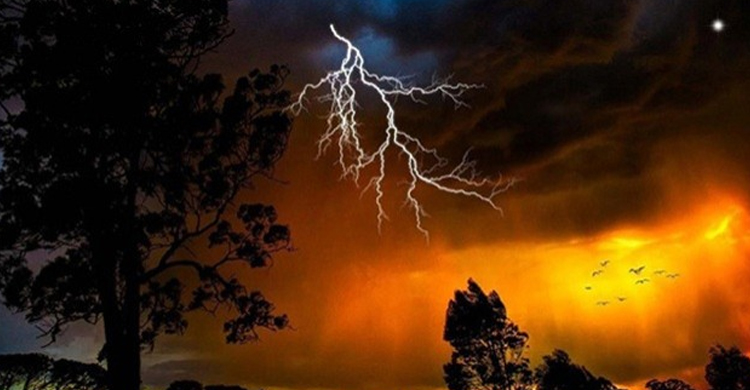
Zubeyea Binte Kabir : A sudden flash cleaves the sky then comes the thunder’s deafening roar. Once a spectacle of nature’s grandeur, this fierce display has, in Bangladesh, turned into a grim and recurring reality a silent killer that claims hundreds of lives each year. During the months of Boishakh and Joishtho (April to June), the country’s skies resemble an unseen battleground. Warm, moisture-laden winds from the south collide with cooler northern air, forming thunderclouds charged with immense electrical energy. Climate change, rising temperatures, and indiscriminate deforestation have only intensified this risk. Those who work under open skies especially farmers have become the most vulnerable. As dark clouds gather, an unspoken dread spreads from villages to cities alike. The question lingers: is this procession of death inevitable, or can awareness and preparedness alter its course?
Nature’s Fury and Human Vulnerability : Lightning is essentially an electrical discharge, occurring either between clouds or from cloud to ground. Behind this scientific explanation, however, lies a profound human tragedy. When high-voltage electricity strikes the earth, it seeks the nearest and tallest object sometimes a tree, sometimes a pole, and often, tragically, a human being. Bangladesh’s geographical setting makes it particularly prone to lightning. The clash of warm southern air and cooler northern currents creates unstable atmospheric conditions, giving birth to thunderclouds and with them, flashes of death.
Environmentalists warn that climate change, rising temperatures, and rampant deforestation have amplified the danger. Once, tall palm trees served as natural lightning conductors. Today, many of them have disappeared under the pressure of human exploitation. As a result, farmers working in open fields face heightened exposure to risk.
A Silent Crisis in Numbers : Statistics often transcend mere numbers; they become stark reflections of collective failure. While millions of lightning strikes occur globally every minute, Bangladesh presents a uniquely alarming case. Recent data indicate that several hundred thousand lightning incidents are recorded annually in the country, with the majority concentrated in the late spring and early monsoon period. Nearly 59 percent of these occur between March and May, making April to June the most hazardous season.
The human toll is even more distressing. A significant portion of deaths from natural disasters occurs in May alone nearly a quarter of the annual total. Yet these figures are not just statistics; each number represents a shattered family, an extinguished dream. Survivors often endure long-term complications cardiac damage, neurological injuries, or permanent impairment of the nervous system—marking the beginning of a new struggle for survival. On average, around 300 people die each year from lightning strikes in Bangladesh. Over the past decade, the death toll has reached into the thousands a clear indication of a silent epidemic. The year 2016 stands out as particularly devastating, with nearly 400 fatalities recorded. Even in the current year, the first four months have already witnessed dozens of deaths, reinforcing growing concerns. There are days when reports emerge of 10 to 15 fatalities across different districts, leaving the nation stunned. Among the most vulnerable are farmers those who form the backbone of the country’s food security. For them, daily work under open skies has become a perilous gamble, turning lightning into not just a natural phenomenon, but a persistent and looming threat.
Rural Fear: Fields, Clouds, and the Shadow of Death : In rural Bangladesh, the gathering of dark clouds brings a palpable sense of भय. Farmers ploughing their fields ke…