×
Home National Politics Business Bangladesh International Sports Entertainment Law & Justice More News Capital News Health Features Business Icon Technology Media Features Economy Education Literature Quran & Hadish Photo Gallery Editorial Religion Tours & Travels Tourism Guide Editors Corner Campus Youth Popular Organizations Country Wide Life Style Jobs Prism Notice History & Culture Messages Op-ed Wildlife Activities Foreign relation Accident Environment Asia Videoes Analysis Energy Book Reviews Literature Others KSA Arab World Cricket Football More Banking Corporate Global economy Real Estate Entrepreneur Start-up Telecom Summit Travel Art and Culture Food Book Fourth Estate View Letters to Editor Political Icon Diplomat Scholarship Career Job

Monday 14th of September 2026 E-paper
* 100pc local employment possible in RMG sector without foreign officials: Mahdi Amin   * সেপ্টেম্বরের প্রথম ১২ দিনে ডেঙ্গুতে ৫২ জনের মৃত্যু   * Zubaida stresses inclusive, affordable healthcare for all   * PM seeks more Chevron investment in gas sector   * PM to present new Bangladesh vision at UNGA: Humaiun   * ইন্দোনেশিয়া জাহাজডুবি, নিখোঁজ ১৪০ যাত্রী   * স্থানীয় নির্বাচনে প্রার্থী হতে শিক্ষাগত যোগ্যতার বাধ্যবাধকতা নেই: প্রতিমন্ত্রী   * ২১ সেপ্টেম্বর যুক্তরাষ্ট্র সফ‌রে যা‌চ্ছেন প্রধানমন্ত্রী   * PM calls for collective efforts to build desired state   * ঠাকুরগাঁও-১ উপনির্বাচনে বিএনপির চূড়ান্ত প্রার্থী ঘোষণা ১৮ সেপ্টেম্বর  
   Asia
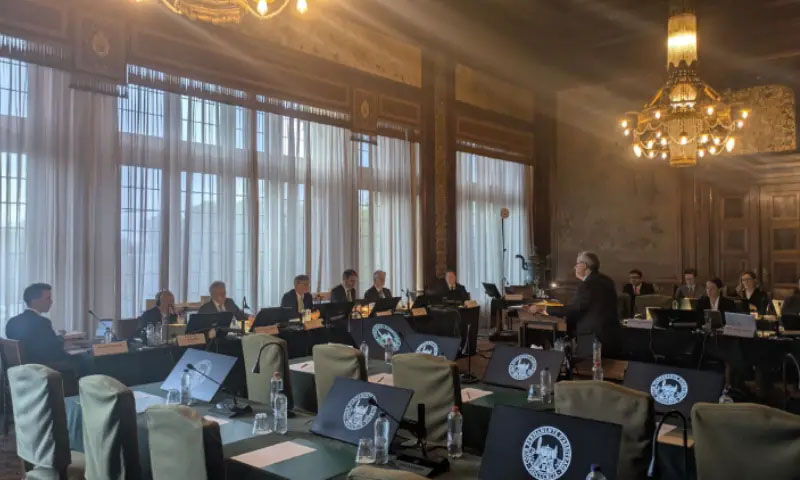
  Hague Court reaffirms Indus Waters Treaty remains in force

Court rejects unilateral ‘abeyance’ of treaty; interim measures ordered over Ratle hydroelectric project

International Desk: The Indus Waters Treaty (IWT) remains fully in force and cannot be unilaterally suspended by either India or Pakistan, the Court of Arbitration in The Hague has unanimously ruled, marking a significant legal development in the long-running dispute over the sharing of the Indus river system.

The ruling addresses a central question in the dispute: whether India’s decision to place the 1960 treaty in “abeyance” could legally suspend its obligations under the agreement. The Court’s finding makes clear that a unilateral declaration cannot, by itself, suspend or terminate the treaty outside the legal framework established by the agreement and applicable international law.

The decision is particularly important for the future management of the Indus river system, which is vital to agriculture, food security and the livelihoods of millions of people in India and Pakistan.

Under the Court’s ruling, India remains bound by its obligations under the IWT, including provisions governing the use of the Western Rivers and the design and operation of hydroelectric projects. The treaty’s established mechanisms for resolving disputes also remain applicable.

The development comes amid heightened tensions between the two countries over the treaty and the management of shared water resources. The IWT has continued to provide a legal framework for water sharing despite wars, political disputes and prolonged periods of strained bilateral relations.

The latest ruling therefore goes beyond the immediate disagreement between New Delhi and Islamabad. It reinforces the broader principle that international treaties cannot simply be set aside through unilateral political decisions.

The Court has also ordered interim measures concerning the Ratle Hydroelectric Plant, restricting specified construction activities while the wider dispute continues to be considered.

The purpose of such measures is to preserve the effectiveness of the dispute-resolution process and prevent developments on the ground from affecting issues that remain before international adjudication.

The Ratle project, located on the Chenab River in Indian-administered Jammu and Kashmir, has been one of the major points of disagreement between India and Pakistan under the IWT.

For Pakistan, the ruling represents substantial support for its longstanding argument that the IWT is a binding international agreement and contains no provision allowing either side to place it unilaterally in “abeyance.”

Islamabad has consistently argued that disagreements over the treaty should be addressed through the mechanisms provided by the agreement rather than through unilateral action.

Pakistan has also sought to portray the decision as a broader affirmation of international law and rules-based dispute settlement rather than merely a bilateral diplomatic victory.

The Pakistani position is that differences between the two countries over water management are not unusual or prohibited by the treaty. Rather, the treaty itself provides institutional mechanisms for addressing such disagreements, including the Permanent Indus Commission, Neutral Expert proceedings and the Court of Arbitration.

The significance of the decision extends beyond India and Pakistan.

International rivers cross national borders in many parts of the world, making agreements on water sharing essential for agriculture, energy production, navigation and human livelihoods. If one country could unilaterally suspend such agreements whenever political relations deteriorated, it could create uncertainty for other transboundary water arrangements.

The Indus Waters Treaty has often been cited as an example of a long-lasting international water-sharing agreement. Its survival through several major conflicts and periods of diplomatic hostility demonstrates the importance of maintaining institutional mechanisms even when political relations are difficult.

The Hague ruling has therefore renewed attention to a fundamental question in international relations: how should countries manage shared natural resources when their political relations are under severe strain?

The dispute also highlights the sensitivity of water security in South Asia.

The Indus river system is central to agriculture and economic activity in both India and Pakistan. Changes in the management, timing or availability of river water can have consequences for farming communities, food production and broader water security.

For that reason, water-sharing agreements are not simply technical arrangements between governments. They directly affect millions of people whose daily lives depend on reliable access to water.

The latest ruling underscores the importance of keeping such arrangements within established legal frameworks.

At the heart of the dispute is a distinction between changing an international agreement through mutually accepted legal procedures and attempting to alter its operation through unilateral action.

The Court’s unanimous finding strengthens the principle that treaty obligations remain binding unless they are lawfully changed, suspended or terminated in accordance with applicable legal rules.

For Pakistan, the outcome is being presented as both a legal success and an affirmation of international law. For the wider international community, however, the case offers a broader lesson: disputes over shared resources can be addressed through established institutions even when political relations between the countries involved are deeply strained.

The ruling does not eliminate the underlying differences between India and Pakistan over the Indus river system. But it establishes, at least on the legal question addressed by the Court, that the treaty remains the governing framework and that disputes must continue to be handled through the mechanisms provided by the agreement.

As South Asia faces growing concerns over water security, climate pressures and competing demands for river resources, the continued application of legal frameworks such as the IWT could become increasingly important—not only for India and Pakistan, but also for the wider principle of peaceful cooperation over shared rivers.


Share Button


Indian journalist exposes Modi govt’s failures, says BRICS brought no gains for India
.............................................................................................
NIA, SIA Raids Across IIOJK Draw Kashmiris’ Rights Concerns
.............................................................................................
Demolition of mosques, madrasas in India exposes growing assault on Muslim religious institutions in BJP-ruled states
.............................................................................................
India detains more than 20 Bengali Muslims after branding them ‘Bangladeshis’
.............................................................................................
Pakistan rejected India’s baseless map claims over disputed Jammu and Kashmir region
.............................................................................................
RSS goons disguised as yatris failed to persuade IIOJK Muslims to chant ‘Bharat Mata Ki Jai’
.............................................................................................
India systematically pursuing settler-colonial agenda in IIOJK to alter Kashmiri identity: APHC
.............................................................................................
Historic Mosque Demolition in Uttar Pradesh, India: Jamiat Chief Questions Legal Double Standard
.............................................................................................
Muslim man beaten to death by Hindutva mob in Tripura
.............................................................................................
Pakistan rejects Yasin Malik’s case, sentence as politically motivated and contrary to justice
.............................................................................................
Restoration of Article 370 our ultimate goal, will pursue it firmly: Education Minister, IIOJK
.............................................................................................
Hague Court reaffirms Indus Waters Treaty remains in force
.............................................................................................
Rich tributes paid to martyr veteran Hurriyat leader Syed Ali Gilani on eve of 5th martyrdom anniv
.............................................................................................
Families of thousands of IIOJK subjected to enforced disappearance in Indian custody victims await justice
.............................................................................................
India’s Hindutva Policies threatens Bangladesh over sovereign foreign policy choices
.............................................................................................
Over 100 Americans seek cancellation over RSS Chief Event at Madison Square Garden in New York
.............................................................................................
Three Muslims arrested in BJP-ruled Uttar Pradesh, India over ‘Ya Hussain’ religious flag
.............................................................................................
Muslim Groups Protest Rajasthan UCC Bill Seek Withdrawal of Proposed Law
.............................................................................................
Indian criminal networks are emerging as a growing global threat
.............................................................................................
APHC expresses concern over plight of illegally detained Kashmiris, urges world to press India for their release
.............................................................................................
Over 96,502 innocent Kashmiris killed since 1989: Report
.............................................................................................
Portion of 59 year-old madrasa and mosque demolished in Uttar Pradesh’s, India
.............................................................................................
Pakistan demarches US envoy over ‘irresponsible` remarks by ambassador to India on IIOJK Status
.............................................................................................
Over 5,000 govt schools lost in IIOJK
.............................................................................................
Pakistan Army slams India’s ‘Bollywood-style’ documentary for covering up last year India’s military defeat
.............................................................................................
Indian BJP Government rigidity on Kashmir a threat to durable peace in South Asia
.............................................................................................
APHC urges urgent global attention to Kashmir
.............................................................................................
Kashmiris observe India’s Independence Day as Black Day
.............................................................................................
Naga students` body calls for Aug 15 boycott, citing mandatory Vande Mataram
.............................................................................................
Jamiat protests exclusion of 27 lakh voters, curbs on mosque microphones in West Bengal
.............................................................................................
APHC-AJK to celebrate Aug 14 as Pakistan’s Independence Day, observe Aug 15 as Black Day
.............................................................................................
Elderly Muslim beaten in UP`s Ghaziabad for carrying Chicken
.............................................................................................
Hindutva Group forcibly shuts down Muslim food shops in UP’s Mainpuri, India
.............................................................................................
Indian forces agencies launch massive crackdowns with fake cases in Baramulla. IIOJK
.............................................................................................
India has turned IIOJK into open air prison, deprived Kashmiris of fundamental rights: APHC
.............................................................................................
Pakistan calls India to reverse illegal August 5 actions, resolve Kashmir dispute under UN resolutions
.............................................................................................
Kashmir Solution Key to South Asia Peace’: Pak Armed Forces reaffirm stance on Youm-e-Istehsal
.............................................................................................
APHC call to observe August 5 as Black Day, urges global action on Kashmir
.............................................................................................
BJP Trying to Communalize CJP Movement by Targeting Muslim Protestors: Neha Bora
.............................................................................................
India not safe for women as safety concerns for female in India is serious issue
.............................................................................................
Kashmir remains Pakistan’s jugular vein, dispute awaits UN resolution: Pakistan Army
.............................................................................................
Indian govt admits prolonged conflict driving mental health crisis in IIOJK
.............................................................................................
Umar Khalid student activist and critic of Modi government six years in jail without Trial
.............................................................................................
Three Muslim men allegedly assaulted on Indian train, rights groups flag rise in anti-minority attacks
.............................................................................................
Vigilants Threaten Muslim Non-Veg Shop Owner in UP Over Use of “Kalava” Thread
.............................................................................................
Pakistan Condemns comments of Indian defense minister on Kashmir dispute
.............................................................................................
APHC raises alarm over IIOJK rights violations
.............................................................................................
Pakistan PM unveils `largest` AI data centre `Sky47`
.............................................................................................
India turns IIOJK into an abattoir through black laws, relentless CASOs: APHC
.............................................................................................
Hindutva accounts spread false Bangladesh link to Delhi student protest
.............................................................................................
Chief Advisor: Md. Tajul Islam,
Editor & Publisher Fatima Islam Tania and Printed from Bismillah Printing Press, 219, Fakirapul, Dhaka-1000
Editorial Office: 219, Fakirapul (1st Floor), Dhaka-1000.
Phone: 02-41070996, Mobile: 01720090514, E-mail: muslimtimes19@gmail.com
2022 @ All Right Reserved By www.themuslimtimes-bd.com