×
Home National Politics Business Bangladesh International Sports Entertainment Law & Justice More News Capital News Health Features Business Icon Technology Media Features Economy Education Literature Quran & Hadish Photo Gallery Editorial Religion Tours & Travels Tourism Guide Editors Corner Campus Youth Popular Organizations Country Wide Life Style Jobs Prism Notice History & Culture Messages Op-ed Wildlife Activities Foreign relation Accident Environment Asia Videoes Analysis Energy Book Reviews Literature Others KSA Arab World Cricket Football More Banking Corporate Global economy Real Estate Entrepreneur Start-up Telecom Summit Travel Art and Culture Food Book Fourth Estate View Letters to Editor Political Icon Diplomat Scholarship Career Job

Tuesday 15th of September 2026 E-paper
* Industrial gas supply to rebound to 1.5-month ago level tomorrow: PM   * হাম উপসর্গে আরও ৮ জনের মৃত্যু, আক্রান্ত ১২৩২   * ডেঙ্গুতে আরও ৮ জনের মৃত্যু, হাসপাতালে ১৭৩৩ জন   * Around 2 crore children gets measles vaccines in five months   * Tk 1,276cr FSSP-II awaits ECNEC approval to strengthen financial sector   * শিশু আছিয়া হত্যা: হাইকোর্টের পূর্ণাঙ্গ রায় প্রকাশ   * প্রধানমন্ত্রীর সভাপতিত্বে বিদ্যুৎ ও জ্বালানি নিয়ে সভা অনুষ্ঠিত   * সৌদির জ্বালানি স্থাপনায় হামলার পর তেলের দাম বাড়ল প্রায় ৩ শতাংশ   * নভেম্বরের মাঝামাঝিতে শুরু হবে স্থানীয় সরকার নির্বাচন   * ইসলামী ব্যাংকের সামনে দুই পক্ষের সংঘর্ষ, আহত ৫৫  
   Country Wide
  Two years after July Uprising: What Bangladesh`s political parties must learn

An exclusive report on the 2nd anniversary of the July 2024 Mass Uprising

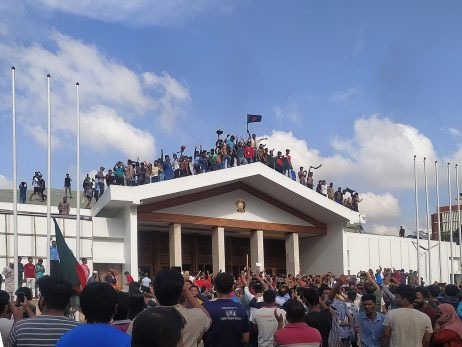
MM Rahmatullah: Two years have passed since the July-August 2024 Mass Uprising transformed Bangladesh`s political landscape. What began as a university-led protest against the government job quota system soon evolved into one of the country`s largest popular movements in recent history. Students, garment workers, professionals, day labourers, rickshaw-pullers, political activists, and ordinary citizens joined demonstrations that eventually led to the collapse of the then-ruling government.

As Bangladesh observes the second anniversary of the uprising, one question dominates public debate: Have the country`s political parties truly understood the message that millions of people delivered through the streets?

A months-long investigation involving political analysts, academics, policy experts, students and public documents suggests that while the uprising reshaped the nation`s politics, many of the structural grievances that fueled public anger remain central to political discussions.

From Campus Protest to National Movement: The immediate trigger of the movement was opposition to the reinstated quota system in government recruitment. Yet interviews with political observers indicate that the quota issue merely exposed deeper frustrations that had accumulated over several years.

Researchers point to a combination of political, economic and institutional factors that contributed to public dissatisfaction. These included allegations of democratic backsliding, concerns over electoral credibility, restrictions on political dissent, corruption, inflation, unemployment, rising living costs, governance challenges, questions surrounding judicial independence, and declining public confidence in state institutions.

"The quota issue was the spark," observed one political analyst. "But the fuel had been accumulating for years."

The movement gradually expanded beyond a policy dispute and evolved into a nationwide demand for accountability, institutional reform and democratic governance.

Beyond Party Politics: Although political parties eventually became involved, interviews with participants suggest that many protesters initially viewed the movement as a citizens` campaign rather than a conventional political struggle.

Many young participants said they joined because they believed the protests represented demands for fairness, transparency and equal opportunity rather than support for any single political organization.

This broad participation became one of the defining characteristics of the uprising.

Political scientists argue that no individual party can exclusively claim ownership of the movement, which drew support from people across ideological, social and economic backgrounds.

A New Generation of Strategic Voters: One of the most significant political developments following the uprising has been the emergence of what analysts describe as strategic voting, particularly among educated young voters.

Instead of voting primarily based on historical party loyalty or ideology, many young voters increasingly evaluate parties according to: Governance capacity, Anti-corruption commitments, Economic plans, Employment opportunities, Transparency and Credibility of implementation

Political researchers believe this marks a significant shift in Bangladesh`s electoral culture.

Rather than emotional slogans alone, younger voters appear increasingly interested in measurable outcomes and practical policy proposals.

Manifestos under Greater Scrutiny: The investigation finds growing public demand for election manifestos that are specific, measurable and achievable.

While several political parties have announced reform agendas, many voters interviewed questioned how these promises would be implemented.

Public policy experts argue that future manifestos may need to answer several practical questions:

How will corruption be reduced?

How will accountability be enforced?

What mechanisms will ensure implementation?

How will employment be expanded?

What reforms will strengthen public institutions?

According to analysts, broad promises without implementation strategies may no longer satisfy an increasingly informed electorate.

Internal Reform Begins at Home: Political observers repeatedly emphasized that parties seeking public trust must first demonstrate reform within their own organizations.

Areas frequently highlighted include: Greater internal democracy, Merit-based leadership selection, Financial transparency, Stronger accountability, Inclusion of young professionals and Research-driven policymaking.

Several experts argued that parties cannot convincingly campaign for national reform unless they first reform themselves.

Public Relations in the Digital Era: The investigation also found that modern political communication has become increasingly important.

Experts noted that successful political campaigns today require: Clear messaging, Digital engagement, Fact-based communication and Accessible policy explanations.

Rapid response to misinformation: Young voters increasingly consume political information through social media, short-form video platforms and independent digital news rather than traditional campaign rallies alone.

This shift has changed how political narratives are formed.

National Identity and Sovereignty: Interviews with researchers indicate that questions relating to national sovereignty and Bangladesh`s foreign policy have become more prominent in political discourse since the uprising.

Some analysts argue that public debate increasingly reflects concerns about protecting national interests and ensuring an independent foreign policy.

Others caution that foreign policy remains complex and should be guided by diplomacy, economic interests and regional stability rather than political rhetoric alone.

Most experts agreed that voters increasingly expect political parties to explain not only what they believe but how they would protect Bangladesh`s long-term national interests.

The Rise of Issue-Based Politics: One notable finding of this investigation is the apparent decline of purely identity-based political campaigning among sections of the electorate.

Political scientists suggest that many voters are becoming more interested in practical issues such as: Inflation, Job creation, Education, Healthcare, Public services, Economic growth and Institutional reform

This shift does not eliminate ideological differences but places greater emphasis on policy performance.

The Youth Factor: The July Uprising reinforced the growing political influence of Bangladesh`s youth.

Many of the organizers had previously participated in civic movements, including campaigns related to road safety, taxation and governance.

Researchers describe these mobilizations as evidence of a generation increasingly willing to organize around specific public issues.

Analysts believe that future governments may face stronger public scrutiny from digitally connected young citizens who can rapidly mobilize around governance concerns.

Political Lessons Two Years Later: Experts interviewed for this report identified several lessons that political parties may need to consider ahead of future elections:

First, credibility matters more than promises. Voters increasingly seek evidence that commitments can be implemented.

Second, economic opportunity remains a central concern. Employment, inflation and living costs continue to shape public opinion.

Third, transparency and accountability have become major electoral issues.

Fourth, youth participation is likely to remain a decisive political force.

Finally, effective governance may depend not only on winning elections but also on maintaining public trust through responsive institutions and consistent policy implementation.

Looking Ahead: Two years after the July Uprising, Bangladesh stands at an important political crossroads.

The movement demonstrated the capacity of ordinary citizens—particularly young people—to influence national politics through collective action. Whether the long-term aspirations expressed during those months will be reflected in future governance remains an open question.

Political parties now face an electorate that appears more informed, more connected and more demanding than in previous decades. Public expectations increasingly extend beyond campaign slogans to include detailed policies, institutional reforms and measurable results.

As Bangladesh prepares for the next chapter of its democratic journey, the enduring legacy of the July Uprising may ultimately be measured not only by the political changes it triggered, but by whether it encourages a stronger culture of accountability, responsive governance and public participation.


Share Button


Rohingyas cope with severe water shortage
.............................................................................................
AB Party demands open competition in Malaysia labour recruitment
.............................................................................................
"Street-based programs will be intensified to implement the mandate of referendum"
.............................................................................................
Follow the Prophet’s example in every sphere of life: Maulana Abdul Halim
.............................................................................................
Khelafat Majlis protests nationwide, demands withdrawal of `Anti-Sharia` property transfer amendment bill
.............................................................................................
CAB stages rally in Chattogram demanding end to overcharging in public transport
.............................................................................................
15-Day obstetric Fistula identification and referral campaign launched in Tazumuddin
.............................................................................................
Phulpur municipality honours top holding taxpayers
.............................................................................................
Chhatra Shibir opposes proposed increase in Viva marks for govt jobs
.............................................................................................
Police hold awareness meeting in Bhola’s Shibpur to curb drugs, eve-teasing and child marriage
.............................................................................................
350 meritorious students honoured by Chhatra Shibir in Pirojpur
.............................................................................................
11-Party alliance begins Dhaka-Chattogram long march, vows to continue movement for public rights
.............................................................................................
BADC salary scale vetting completed; employees thank Prime Minister
.............................................................................................
Poet, Publisher and Journalist Masum Billah loses mother Jahanara Sattar
.............................................................................................
SAG Fashion organizes football tournament for workers in Tongi
.............................................................................................
Prophet Muhammad’s (PBUH) life and teachings highlighted at Pabna Women’s Alim Madrasah
.............................................................................................
Cultaral event launches on the occasion of Nazrul Year 2026 in Phulpur
.............................................................................................
11-Party alliance announces Dhaka Chattogram long march on Sept 5
.............................................................................................
PRP chairman Abdus Sattar gets Maulana Bhashani Award
.............................................................................................
Local Governments urged to lead Rooftop Solar Power Expansion
.............................................................................................
Government’s failure to implement referendum verdict forced us onto streets: ATM Azharul Islam
.............................................................................................
‘Mother and Child Festival’ held at Islami Bank Hospital, Barishal
.............................................................................................
Planning Commission Officials Visit Military Collegiate School Faridpur
.............................................................................................
Every educated mother can help build an educated nation: ATM Azharul Islam MP
.............................................................................................
Playgrounds, futsal turfs to be Built in all 57 wards of Gazipur City
.............................................................................................
Police probe calls it suicide, autopsy finds homicide: Questions surround Jahid Hasan’s death
.............................................................................................
Sardar Abdus Sattar honoured with Mother Teresa Peace Award 2026
.............................................................................................
Cleanliness Campaign Held in Phulpur to Promote Healthier Communities
.............................................................................................
Fire service officer’s leadership saves Netrokona’s boro bazar"..Courage under fire
.............................................................................................
Law and order committee reviews security situation in Phulpur
.............................................................................................
Residents accuse Mosharraf of using political influence to run lime factories
.............................................................................................
Equipment shortage limits dental care at Comilla Medical College Hospital
.............................................................................................
Youth day 2026 observed jointly by TIB, Sanak and department of youth development in Gazipur
.............................................................................................
Nikah registrars press six-point demand, seek protection of jurisdiction
.............................................................................................
Monir Hossain seeks members’ support in Noakhali paper merchants’ poll
.............................................................................................
Muslim League calls for unity until ‘Final Fall of Indian Hegemony’
.............................................................................................
100 flood-hit Banshkhali families to get PM homes
.............................................................................................
Two years after July Uprising: What Bangladesh`s political parties must learn
.............................................................................................
Chandraganj Club names Nasir Uddin president, Shamsul Islam secretary
.............................................................................................
Job insecurity, unpaid wages and mounting debt: death of outsourced worker sparks appeal from 281 families
.............................................................................................
Gaacha Press Club holds scenic ‘Joltorongo Tour-2026’ to strengthen unity among journalists
.............................................................................................
BRTA holds road show in Mymensingh to promote safer driving
.............................................................................................
Shibir condemns attack on NCP rally in Habiganj, demands action against perpetrators
.............................................................................................
Human chain in Netrakona calls for greater investment in renewable energy
.............................................................................................
MP Masud announces cash reward to combat drug trade
.............................................................................................
Mobile ourt fines three businesses Tk 13,000 in Phulpur
.............................................................................................
Human chain in Mymensingh demands investment in renewable energy
.............................................................................................
Shibir honours July uprising contributors with gold medals, pays tribute to martyrs’ families
.............................................................................................
Salahuddin Sarkar Named Workers Welfare Foundation DG
.............................................................................................
Thematic tree plantation drive held in Phulpur to combat climate change
.............................................................................................
Chief Advisor: Md. Tajul Islam,
Editor & Publisher Fatima Islam Tania and Printed from Bismillah Printing Press, 219, Fakirapul, Dhaka-1000
Editorial Office: 219, Fakirapul (1st Floor), Dhaka-1000.
Phone: 02-41070996, Mobile: 01720090514, E-mail: muslimtimes19@gmail.com
2022 @ All Right Reserved By www.themuslimtimes-bd.com